

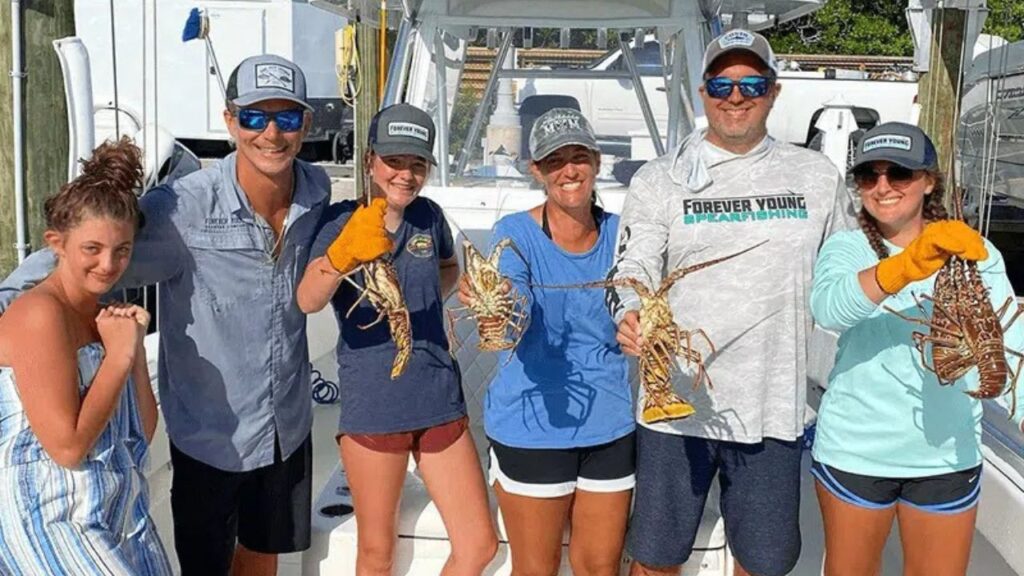
To catch lobster in the Florida Keys, you'll need a net, a tickle stick, and some patience. Most spiny lobsters hide beneath rocks and reef ledges during the day. Once you spot one, you use the stick to gently guide it toward your net. Sounds easy, but lobsters move fast. Get too close too quickly, and yours might disappear before you even lift the net.
Never caught one before? You can learn on a guided trip. At Forever Young Charter Company, we take guests out for lobster hunting in the Florida Keys. We provide the gear and an in-water guide to help you get started.
You can swim right past a lobster without seeing it. During the day, Florida spiny lobsters tend to stay tucked under rocks and ledges. They don't always leave much of themselves showing, either. Look for two long antennae sticking out of a gap. Sometimes, you can see part of the shell farther inside. Other times, the antennae are your only clue.
Here's where to look:
Don't start moving rocks around to find them. Leave the coral alone, too. If you can't see what's inside a hole, move on. There could be an eel or another animal hiding there.
Before you try catching anything, spend a little time with the gear. It can feel awkward holding a net in one hand and a stick in the other, especially when you're underwater. The tickle stick is a thin rod. You use it to gently guide the lobster out from under a rock. The net is there to catch it when it moves.
You'll also need a mask, fins, a lobster gauge, and a catch bag. The gauge helps you check if the lobster is big enough to keep. Try moving the net and stick together before you dive. You'll soon see why it helps to have the net ready first. There's not much time to get it into place once a lobster starts moving.
If you've never used a tickle stick before, ask your guide to show you how it works. It's easier to learn before you're trying to catch a lobster.
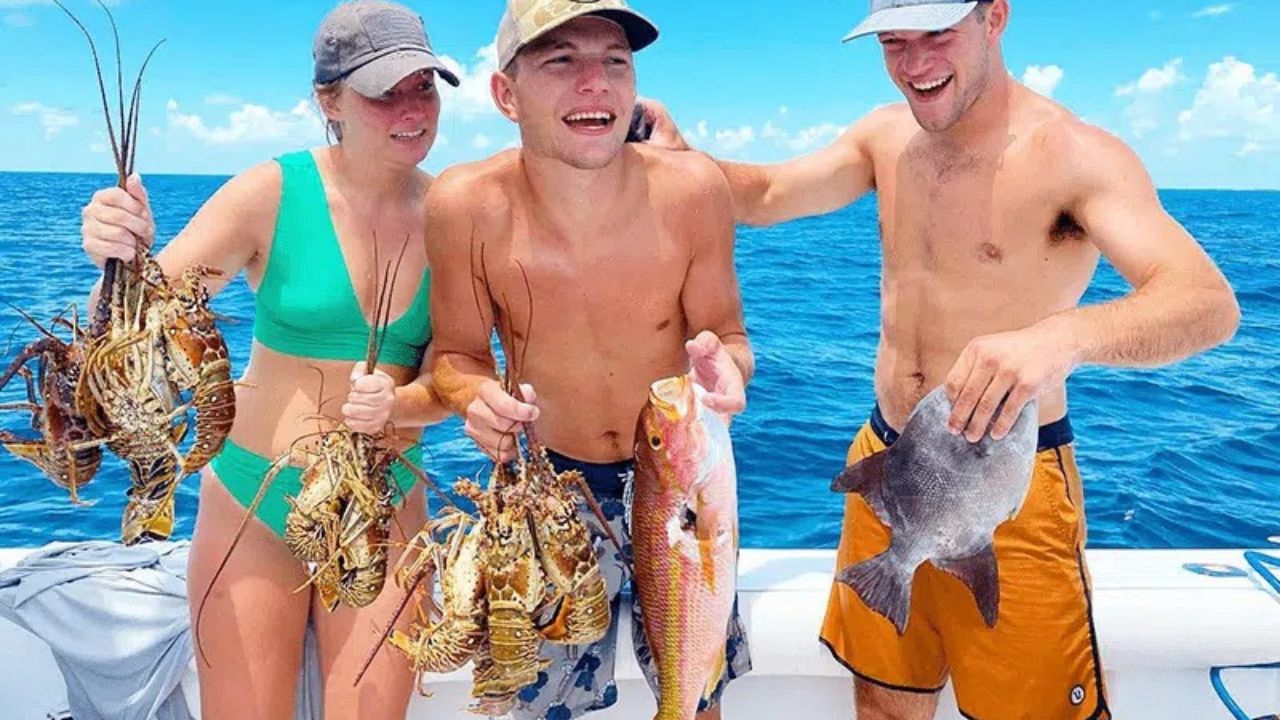
Say you spot two antennae beneath a ledge. You're close enough to see the lobster, and you want to catch it before it disappears. Don't rush in. A sudden kick or quick reach can send it farther under the rock. If your fins stir up sand, you might lose sight of it altogether.
Get into a position where you can see the opening, and keep your fins clear of the bottom. You should have enough room to move your net without hitting the reef. If you're freediving, keep an eye on how long you've been underwater. Don't try to squeeze in one more attempt when you need air. Go back up and try again when you're ready.
This part can make or break your catch. If you move the lobster before your net is ready, you may not get another chance. Look at the space around the ledge. Where could the lobster come out? Is there enough room to hold the net without touching the coral? Once you've found a good position, keep the net steady. You want it near the opening, ready for the lobster to move into it.
Don't push your net into a narrow crack. It could get stuck or damage the reef. And if the lobster is too far back to reach, leave it alone. There'll be other places to look.
Now comes the fun part. Your net is ready, and you've got a clear view of the lobster. Gently work the tickle stick behind it. A light touch can encourage it to move forward. As it comes out, keep the net where it needs to be.
Once the lobster is inside, close the opening so it can't swim back out. But don't expect every attempt to work. A lobster can flick its tail and shoot backwards before you know what's happened. You might get the net almost over it, only to watch it slip away. It happens, so don't jab at the lobster or chase it into the rocks. Instead, find another one with a better hiding spot.
You've finally got one on the net. Before you put it in your bag, you need to check its size. Florida spiny lobsters must have a carapace longer than 3 inches. That's the hard shell covering the front part of the body. You measure from between the horns near its eyes to the back of that shell.
Use a lobster gauge while you're still in the water. Don't measure the tail. If the lobster is too small, let it go. You also need to check for eggs beneath the tail. If it's carrying eggs, release it. Not sure you're measuring it correctly? Ask your guide to show you. It's better to check than guess. For catch limits, season dates, and other rules, see our Florida Keys lobster season guide. You can also check the current requirements on the Florida Fish and Wildlife Conservation Commission website.
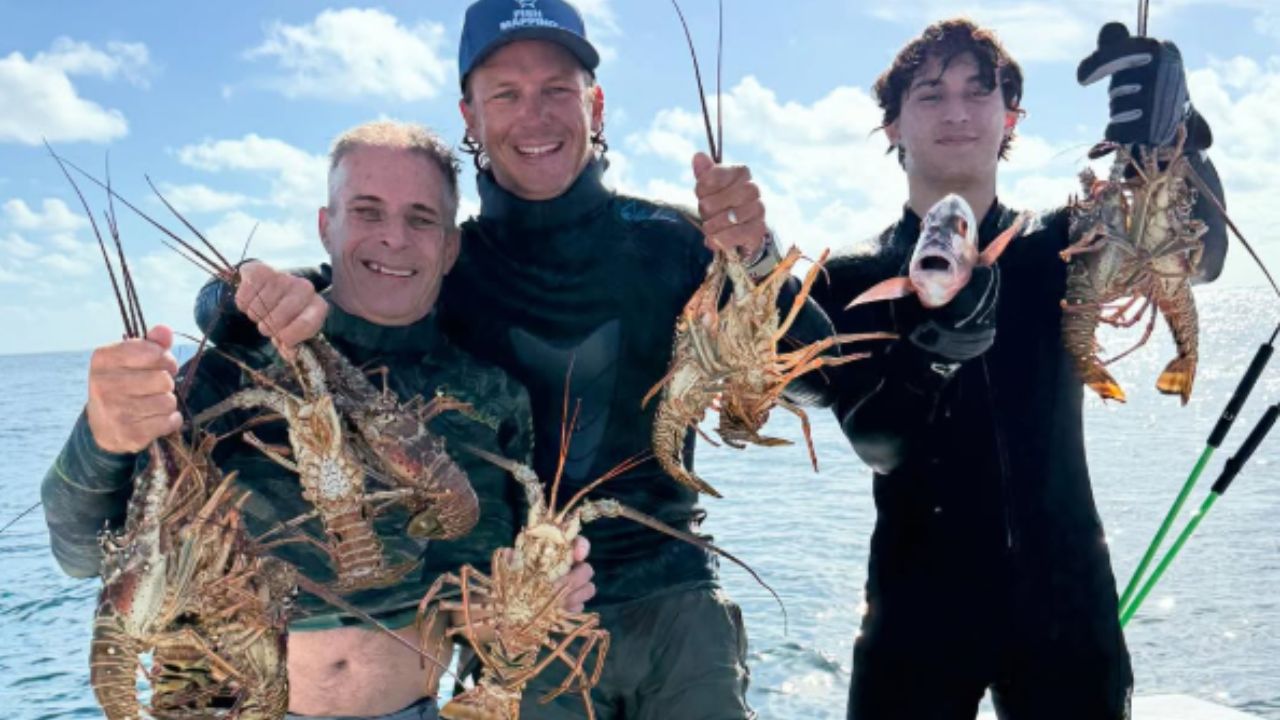
Once you've checked that your lobster is legal to keep, place it in your catch bag. Close the bag properly before you let go. You'd hate to lose the lobster you just spent several minutes trying to catch because the bag wasn't shut.
Keep the bag secure while you swim. Make sure it doesn't drag across the reef or catch on rocks. If you're scuba diving, follow your guide's instructions for carrying the bag and returning to the boat. If you're freediving, stay with your buddy and come up for air whenever you need to. And keep track of how many lobsters you've caught. You must stay within the daily limit.
It can be, especially if it's your first time. Finding lobster takes a bit of practice. You might swim past a good hiding spot without noticing the antennae. And even when you find one, getting your net in the right place isn't always easy.
An experienced guide can show you where to look and how to use your gear. At Forever Young Charter Company, we offer private lobster hunting charters in the Florida Keys. You can choose a four-hour, six-hour, or eight-hour trip, with scuba and freediving options based on your experience.
Our trips include:
Never caught a lobster before? Let us know when you book. We'll help you choose a trip that suits your skills. Explore our Florida Keys lobster hunting charters and choose a trip that works for you. We'll help you get comfortable with the gear before you try catching your first lobster.
Can beginners catch lobster in the Florida Keys?
Yes, you don't need years of experience to learn how to catch lobster. But you should be comfortable swimming and using the gear. A guide can show you how to spot lobster and help you practice using a net and tickle stick.
Can you catch Lobster without scuba gear?
Yes, you can catch lobster while freediving, so scuba tanks aren't always needed. You should already be comfortable diving below the surface and know how to do it safely. Always dive with a buddy and stay within your limits.
What is the easiest way to catch a spiny lobster?
A net and tickle stick are a good place to start. Use the stick to gently guide the lobster out of its hiding spot and into your net. Look for one that's easy to reach rather than trying to pull one from deep inside a hole.
Do you need a guide to catch lobster in the Florida Keys?
No, you can go without a guide if you have the right gear, skills, and legal permits. But if it's your first time, having someone show you where to look and how to use the equipment can make things easier.

