

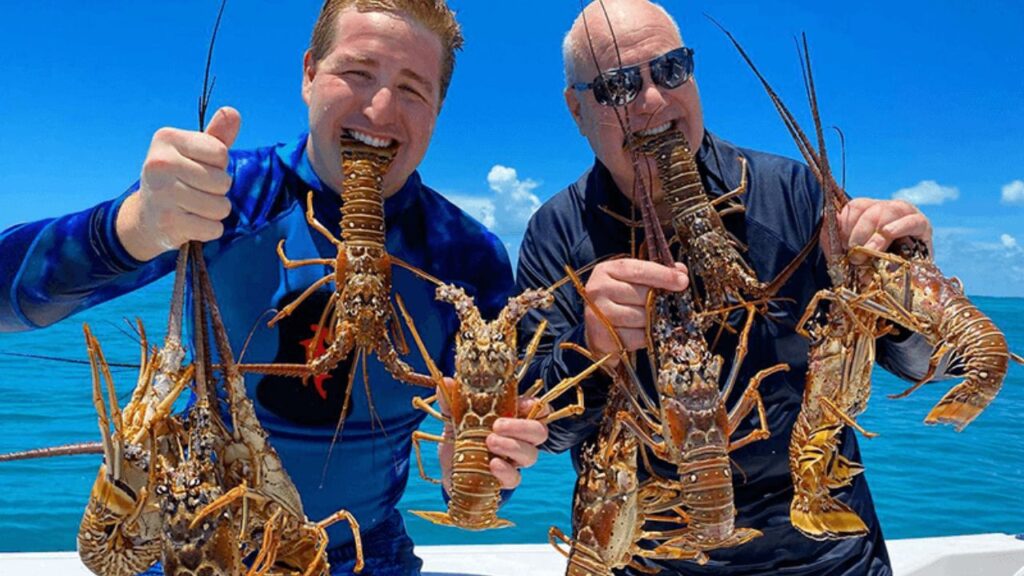
Most people arrive in Islamorada Florida thinking lobster diving will be challenging. That assumption changes the moment they spot their first lobster hiding beneath the reef.
That’s the reality of lobster diving in Islamorada Florida. From the outside, it feels technical and skill-heavy. But on a private charter, it quickly turns into something simpler. The reef is chosen for you, the pace is guided, and the learning happens naturally in real time.
Almost every beginner arrives with the same doubts. Will I manage this? What if I miss everything? Am I even ready for this? Those thoughts fade fast once clear instructions and steady guidance take over before the first dive.
If you want to experience it without overthinking it, explore guided Islamorada lobster hunting charters with us at Forever Young. Because once you are in the water, uncertainty disappears and everything begins to make sense
The moment you reach the reef, the experience starts to feel more approachable. Many lobster hunting areas are shallow, the water is often calm, and there is no need for complicated diving equipment.
Private charters keep it simple. A short briefing happens before departure, and it feels more like local advice than instruction. Instructions include how to move in the water, where lobsters tend to hide, and what not to do around coral.
There is usually a moment when people relax a little. Not because everything is mastered, but because it finally feels manageable.
Common worries before the trip:
Most of that fades once the guide explains how the day actually works in the water.
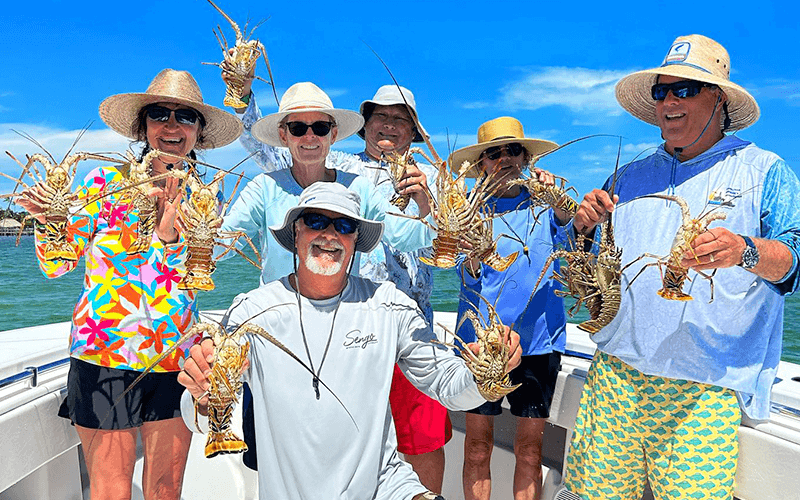
Most travelers don’t expect how quickly a simple boat ride turns into real underwater action in lobster diving in Islamorada Florida. What feels uncertain at first quickly becomes clear once the reef appears and the guide sets the rhythm.
The moment the boat leaves the dock, the tone of the day changes. Islamorada fades behind you, the water opens up, and conversations slow down. People start scanning the horizon more than their phones. It feels like a transition without anyone saying it out loud.
Guides usually talk during this part, but not in a formal way. They point out reef areas, explain conditions, and sometimes share small stories from past trips. It is simple, but it builds context.
Somewhere during the ride, the question shifts from “Is this going to work?” to “When do we actually get in?”
When the equipment comes out, most beginners expect complexity. Instead, it is surprisingly straightforward. A mask, fins, a light suit, a net, and a simple tool used to gently guide lobsters out of reef spaces. That is usually it.
Nothing feels overwhelming once it is explained properly. In fact, most people try everything on the boat first just to get comfortable with it.
Typical gear includes:
There is usually a moment of hesitation right before the first entry. Then someone jumps in first, and everything becomes easier for the rest.
The water feels different the moment you enter it. Warm, quiet, slightly surreal.
At first, everything looks like shapes and shadows. Coral formations, sand patches, small movements that are hard to interpret. Lobsters are not obvious. They are tucked under ledges or deep inside coral gaps. This is where most beginners expect instant success, but the reef does not work like that.
The real learning starts here:
That is completely normal. No one spots everything on the first dive. Before long, most beginners realize that success comes from slowing down and paying attention. Not rushing through the reef.
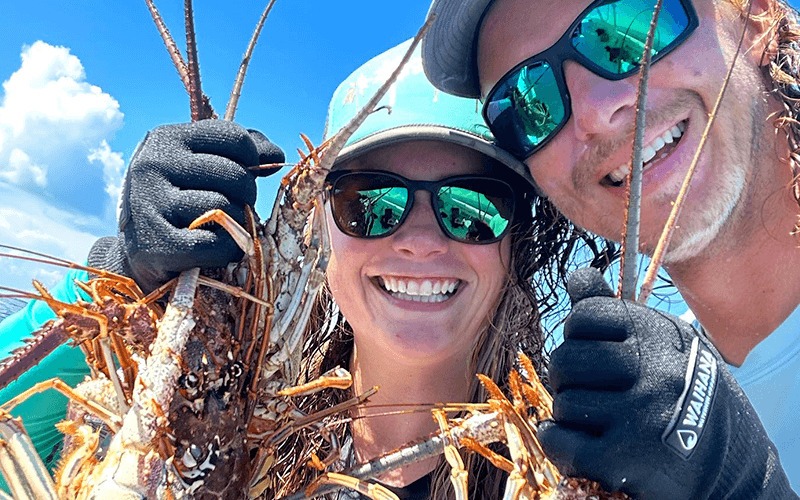
Catching your first lobster is not about speed or excitement. It is a calm, steady process that becomes surprisingly simple with the right guidance.
The guide usually leads the approach. You learn by watching first, then trying. A slow movement toward the reef. A careful angle, and then a quick, clean capture. The first successful catch changes how everything feels underwater. Not because it is difficult, but because it finally makes sense.
A few things become obvious in that moment:
Rules around size and sustainability are also explained in real time. Some lobsters are released, and that becomes part of the learning instead of a restriction. It starts to feel less like catching and more like understanding the reef.
The ride back is quiet in a different way.
You are not processing instructions anymore. You are replaying moments like the first sighting, the hesitation before the dive, or the first successful capture. Even the small mistakes feel like part of the experience now.
This is usually when the value of a private charter becomes clear. No rush, no crowd pressure or confusion underwater. Just steady guidance from start to finish.
Trips during Islamorada lobster season 2026 tend to feel even more active, with better visibility and higher reef activity. But the structure of the experience stays the same. For many first-timers, that structure is what turns uncertainty into confidence.
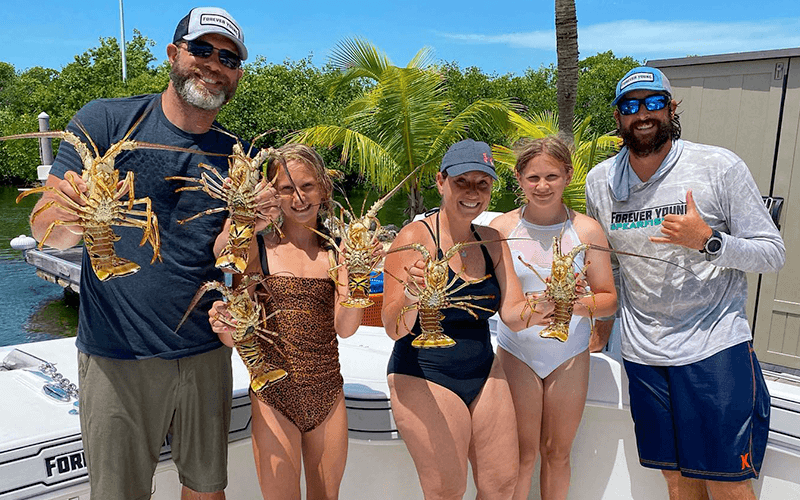
Private lobster charters feel different because they remove confusion from start to finish. Instead of figuring things out on the water, everything is guided step by step, which makes lobster diving in Islamorada, Florida far easier for beginners.
With Forever Young’s lobster hunting charters in Islamorada, Florida, the trip is planned so guests understand the process before entering the water. That early clarity changes how the entire day feels once you reach the reef.
Key advantages include:
This is why many travelers prefer guided trips over going alone.
By the end of a lobster diving trip in Islamorada, Florida, the reef stops feeling like something to win against. It slowly becomes something you learn to read. Each dive adds a little more clarity, until the water starts to feel familiar in a way it never did at the start.
That is the real shift private charters create. Not just catching lobsters, but learning how the reef actually behaves when you slow down and pay attention. Some moments will feel easy, others will feel uncertain, but that balance is what makes the experience stick.
Long after the boat ride back, it is not the catch that stays first. It is that quiet realization that the ocean was never about control. It was about understanding it, one dive at a time.

